
Respecting Roots: How Cultural Values Can (and Should) Shape ABA Therapy Plans
Each child lives within a rich mixture of family traditions, beliefs, and practices in culturally responsive ABA therapy. Success in Applied Behavior Analysis (ABA) therapy depends heavily on cultural factors. Therapists who practice cultural competence create bridges between their methods and their clients’ needs, which promotes trust and better communication.
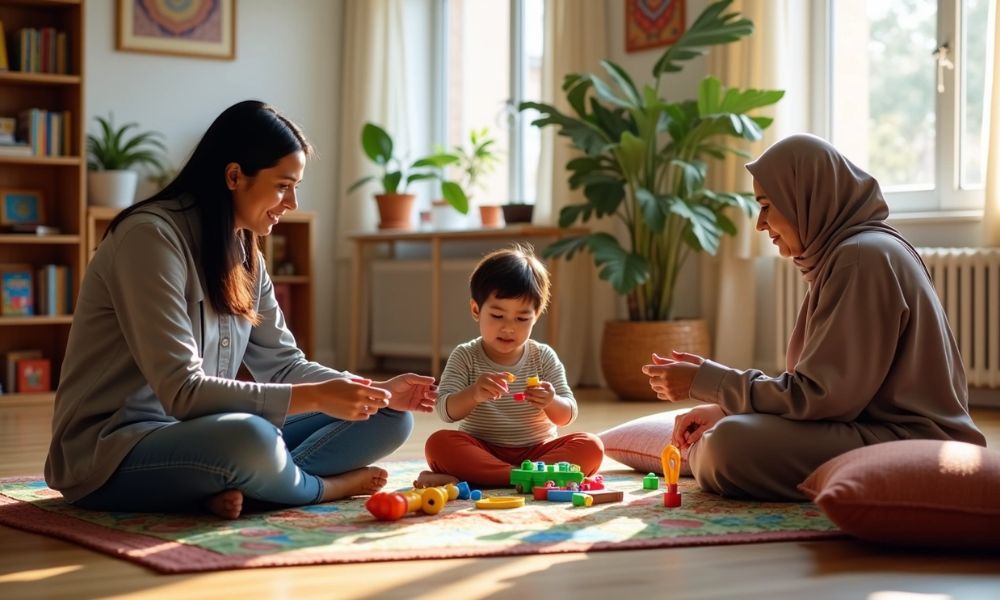
Our team at Kids Club ABA knows how cultural norms affect autism understanding and treatment across different communities. Research proves that culturally adapted interventions work better for specific populations than generic methods. ABA therapy should not follow a rigid Western framework – it needs to adapt flexibly to each family’s unique cultural context.
This piece will get into how cultural values can and should shape effective ABA therapy plans. We’ll look at everything from language choices and family structures to religious practices and social customs to make sure therapy respects and includes your family’s cultural foundations. Everyone benefits when ABA practitioners fully understand how language and culture affect the individuals and families they help.
The role of cultural values in shaping ABA therapy
Family traditions and cultural practices are the foundations that make ABA therapy work. Cultural responsiveness means more than just checking boxes on forms. It’s about understanding how culture shapes our view of behaviors, ways we communicate needs, and responses to interventions.
Why therapy must reflect family traditions
ABA therapy works best when it respects each family’s unique cultural identity. Studies show better results when providers gather cultural information during assessments. This helps clients learn skills they need to join family events, religious gatherings, and community activities that match their values.
Take familismo in Latino communities – a value that puts strong family bonds first. Latino families often want grandparents and other extended family members to be part of parent training sessions and key meetings. This makes goals focused on keeping family traditions a must-have rather than just nice-to-have.
Kids Club ABA knows treatment plans need to work with cultural norms, family traditions, and religious practices. This helps us create goals that strike a chord with families.
How culture influences behavior and learning
Our cultural background shapes what we see as “normal” versus “concerning” behavior. A therapist who gets this knows that what one culture sees as challenging might be perfectly normal in another.
Culture also affects:
- How families understand their child’s diagnosis
- Their choice to seek treatment
- Which providers and methods they prefer
- Whether they stick with services
Culture goes beyond just ethnicity. It includes income level, age, nationality, gender, and religion. These all affect how families take part in therapy. A therapist’s own cultural values and biases also play a role in how they see client behaviors and plan treatments.
Examples of cultural norms affecting therapy goals
Multiple generations living together is common in Filipino families. What might look crowded by Western standards is perfectly normal for them. This means suggesting separate sleeping spaces might clash with their cultural norms, even if it’s standard advice.
Different cultures also talk about things differently. Japanese parents might say “panic” for what Western therapists call a “tantrum” or “meltdown”. Without knowing these differences, therapists might misread behaviors or suggest treatments that don’t fit the family’s culture.
Eye contact is another good example. Many traditional ABA programs target it, but in Asian cultures, kids show respect by not making eye contact with adults. This isn’t something that needs fixing.
Kids Club ABA believes treatments work better when they fit with cultural practices. This builds trust and leads to better results for the children in our care.
Language and communication in culturally responsive ABA
Language powerfully connects families to their heritage and identity. Kids Club ABA understands that communication challenges in autism therapy go beyond teaching language skills. These challenges involve honoring the linguistic diversity that shapes each child’s world.
The ‘English only’ myth and its effects
Myth: Children with autism should focus exclusively on English to avoid confusion.
Reality: Research shows that bilingualism doesn’t delay language development or cause additional stuttering in children with autism.
Many therapists recommend English-only approaches due to misconceptions rather than evidence. Right now, 18 states have made English their official language. This creates situations where bilingual families feel pressured to give up their native languages. The situation becomes more concerning since approximately 25% of children diagnosed with autism in the United States come from bilingual households.
Benefits of supporting home languages
Your child’s home language provides several advantages:
- Strong family relationships and cultural connections
- Better communication with extended family members
- Greater cognitive flexibility and social awareness
- More meaningful social interactions
Research reveals that bilingual toddlers with autism vocalize and use gestures more than their monolingual peers. On top of that, first language knowledge helps develop vocabulary in the second language. This evidence contradicts the belief that bilingualism causes confusion.
ABA therapy for bilingual families: what works
ABA approaches that work best for bilingual children include:
Research links simultaneous bilingual instruction to better vocabulary and response outcomes. Kids Club ABA uses structured language exposure, consistent usage across languages, and visual supports. These methods help children feel comfortable with both languages.
A good match between interventions and your family’s language needs leads to better participation and better outcomes. Taking away a child’s native language can hurt their social-emotional growth and family bonds.
Using interpreters and bilingual staff effectively
Qualified interpreters play a vital role when families speak different languages than their therapists. While remote options exist, face-to-face interpretation often works better.
Successful strategies include going over key terms with interpreters beforehand and encouraging interpretation of all communication. Speaking directly to clients rather than interpreters helps too. Remember to pause enough for interpretation.
Kids Club ABA provides bilingual materials and conducts therapy in the learner’s native language whenever possible. This creates an environment where we celebrate every child’s cultural identity.
Respecting family structure and social customs
The family unit is the life-blood of culturally responsive ABA therapy. Kids Club ABA understands that social customs differ in a variety of cultures, so this shapes how we deliver and receive therapy.
Including grandparents and extended family in therapy
ABA therapy involvement goes beyond parents and siblings. Extended family members, such as grandparents, aunts, uncles, and cousins, play vital roles to reinforce skills learned during therapy sessions. These family members create a broader support network that helps children with autism thrive.
“The people who interact with the child on a daily basis are the focus of family involvement in ABA therapy,” notes one expert. Parents need the most intensive training, yet extended family members who spend substantial time with the child should also understand therapy goals and techniques.
Adapting to different greeting styles and social norms
Social greetings change based on cultures and age groups. Fourteen-year-olds don’t usually greet each other with formal “hellos”—they might use casual “hey,” “what’s up,” or simply nod. Teaching greetings that don’t match cultural norms can make social interactions harder.
Kids Club ABA teaches age-appropriate and culturally relevant social skills. This means understanding that:
- Some cultures value direct communication while others prefer indirect approaches
- Family authority structures differ between collectivist and individualist societies
- Behaviors seen as challenging in one culture might be normal in another
Understanding eye contact and personal space across cultures
Eye contact—a common target in traditional ABA programs—means different things in different cultures. Western practices might emphasize direct eye contact, but many East Asian and Indigenous communities see averting one’s gaze with adults as respectful rather than disrespectful.
Autistic individuals often find eye contact easier in familiar, safe spaces with loved ones where they feel less pressure to mask. We recognize that eye contact isn’t a universal social cue but rather a culturally shaped form of non-verbal communication.
Personal space expectations also vary worldwide. Japanese culture values greater personal distance during interactions, while Italian culture welcomes closer physical proximity. This knowledge of cultural differences helps children succeed in diverse social environments.
Building cultural competence and humility in ABA teams
Building a culturally sensitive therapy team needs ongoing learning and humility. Kids Club ABA believes cultural competence isn’t a destination but an experience.
What is cultural humility in healthcare?
Cultural humility is different from cultural competence. Originally proposed in 1998, cultural humility shows “knowing how to maintain an interpersonal stance that is other-oriented in relation to aspects of cultural identity that are most important to the person”. Cultural humility acknowledges that understanding others’ cultures remains a lifelong process, unlike competence which suggests an endpoint of mastery.
Training staff in cultural responsiveness
One-time workshops don’t create lasting change. Regular cultural competence education improves how ABA staff works with diverse populations. Kids Club ABA uses training that includes culturally appropriate resources in intervention planning and supervision. We follow the National Standards for Culturally and Linguistically Appropriate Services.
Ongoing self-reflection and bias awareness
Self-awareness is the life-blood of cultural responsiveness. Practitioners need to understand their own cultural biases through:
- Identifying personal biases using self-assessment tools
- Discussing cultural issues with colleagues
- Mindful practice helps observe thoughts without judgment
This self-reflection prevents unconscious bias from affecting behavior labels or intervention designs.
Collaborating with families to co-create goals
Authentic collaboration makes families experts on their own culture. Practitioners should involve families when setting goals to ensure treatment matches cultural values and expectations. This cooperative approach builds respectful partnerships where families teach providers about their cultural context.
Ethical responsibilities in culturally inclusive care
The Behavior Analyst Certification Board emphasizes cultural competence in its ethical guidelines. Ethical practice needs practitioners to understand how their backgrounds shape assessment and intervention strategies. Without doubt, this ethical foundation supports equitable and respectful care for all clients whatever their cultural background.
Conclusion
ABA therapy works best when it recognizes and celebrates the mixture of cultural elements that makes each family special. Our experience shows that therapy succeeds when it respects family traditions, language priorities, social customs, and religious practices. Cultural responsiveness serves as the cornerstone of meaningful outcomes in ABA therapy.
Families need therapy that builds up their cultural connections. Children do better when therapists respect their complete identity and cultural heritage during treatment. Practitioners become more capable when they show cultural humility with each family. They learn that understanding cultural nuances is a continuous trip, not a final destination.
Kids Club ABA believes that contextual fit between interventions and cultural practices creates deeper family involvement and improved results. We team up with families to create goals that match their values. On top of that, it helps to know that supporting bilingualism boosts progress. In stark comparison to this, old myths about language development suggested otherwise.
ABA therapy must grow beyond standard Western approaches to offer personalized support that celebrates diversity. Great therapy builds on cultural foundations to help children thrive in ways that matter to their families. It never asks them to set aside their cultural identities.
We create better therapy environments by treating cultural differences as advantages rather than roadblocks. This helps children develop real connections with their heritage while learning essential skills. Without doubt, this approach stays true to behavior analysis science while honoring our families’ rich diversity.
Key Takeaways
Understanding how cultural values shape effective ABA therapy can transform outcomes for children with autism and their families. Here are the essential insights for creating truly inclusive and respectful treatment approaches:
• Cultural responsiveness is essential, not optional – ABA therapy must honor family traditions, language preferences, and social customs to achieve meaningful outcomes and build trust with families.
• Bilingualism enhances rather than hinders progress – Supporting home languages strengthens family bonds, preserves cultural identity, and actually improves vocabulary development in children with autism.
• Family structures vary across cultures – Include extended family members like grandparents in therapy planning, as they often play crucial roles in reinforcing skills and supporting the child’s development.
• Social norms differ significantly between cultures – What’s considered appropriate behavior (like eye contact or greetings) varies widely, so therapy goals must reflect culturally relevant social skills rather than universal standards.
• Cultural humility requires ongoing commitment – ABA teams need continuous training, self-reflection, and collaboration with families to address biases and create truly inclusive care environments.
When ABA practitioners embrace cultural diversity as a strength rather than an obstacle, they create therapy environments where children can develop authentic connections with their heritage while gaining essential life skills. This approach honors both the science of behavior analysis and the beautiful diversity of the families being served.
FAQs
Q1. How does cultural responsiveness impact ABA therapy outcomes? Cultural responsiveness is essential for effective ABA therapy. When therapists honor family traditions, language preferences, and social customs, it leads to better engagement, trust, and ultimately more successful outcomes for children with autism.
Q2. Is bilingualism beneficial for children with autism in ABA therapy? Yes, bilingualism can be beneficial. Supporting a child’s home language strengthens family bonds, preserves cultural identity, and can actually enhance vocabulary development in both languages. Bilingual approaches in ABA therapy often lead to better communication outcomes.
Q3. How can ABA therapy incorporate extended family members? ABA therapy can involve extended family members, such as grandparents, aunts, and uncles, by including them in therapy planning and training. These family members often play crucial roles in reinforcing skills learned during therapy sessions and provide additional support for the child.
Q4. Why is cultural humility important in ABA practice? Cultural humility is crucial because it acknowledges that understanding others’ cultures is an ongoing process. It requires continuous self-reflection, bias awareness, and collaboration with families to create truly inclusive care environments and more effective therapy plans.
Q5. How can ABA therapists adapt to different cultural norms regarding social skills? ABA therapists should focus on teaching age-appropriate and culturally relevant social skills. This involves understanding that behaviors like eye contact, personal space, and greeting styles vary significantly across cultures. Therapists should work with families to ensure that social skill goals align with their cultural values and expectations.